
Pier Paolo Chiasso: The Talent Riccardo Cotarella Knew How to Wait For
Written by Davide Gangi | Published in people, wine 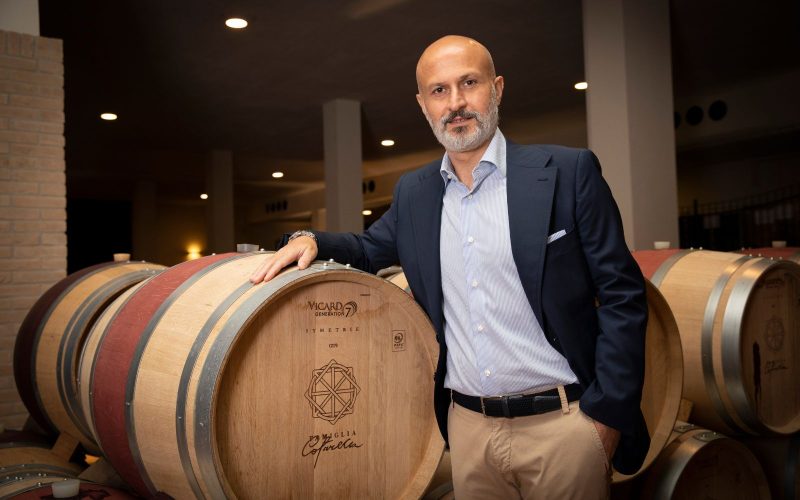
Telling Pier Paolo Chiasso’s story by starting with the wines that bear his name today would probably be the easiest approach, but it wouldn’t be the one I’d choose, because to truly understand him, you have to go back in time, to when wine wasn’t yet his profession and, above all, wasn’t something he enjoyed drinking.
He was a teetotaler by conviction, and when you think about the man he would become, it almost seems like a twist of fate.
He had grown up in a small town near Orvieto, where making wine at home was a common practice in many families. His earliest memories, however, were not happy ones. He was left with a lasting impression of sour smells and unpleasant, unhygienic sensations that bothered him and eventually led him to believe that wine was simply like that. As a child, he also served as an altar boy, and not even the wine the parish priest let him taste managed to change his mind.
Today, it almost makes me smile to think that one of the men I consider to be among the greatest noses and palates in Italian wine began his journey by trying to stay away from a glass of wine.
Then Dominga Cotarella came into his life. They were still dating, and through her, Pier Paolo naturally began spending time at a home where wine was part of everyday life—it came up in conversation, accompanied their work, and inevitably continued when they gathered around the table. Riccardo was Dominga’s father, and the bond that grew between him and Pier Paolo would end up completely changing the young man’s view of wine.
Perhaps the best part is the way it happens.
Riccardo Cotarella doesn’t try to convince him or use the weight of his own experience against him. He doesn’t expect him to learn quickly, and above all, he doesn’t make him feel obligated to develop a passion for something just because it has entered his life. He introduces him to wines different from the ones he remembered—wines that are clean, precise, with clear and recognizable aromas. Many bear Cotarella’s signature, and through those glasses, he slowly discovers that there is a world completely different from the one he had known until then.
First comes curiosity, then the desire to understand. The rest will come in time. Riccardo isn’t in a hurry to figure out how far Pier Paolo might go. He cares for him even before knowing where that curiosity will lead him, and he accompanies him as he approaches wine without pressure, respecting his own pace and letting him discover something he had even rejected until recently.
Perhaps he had already sensed something, or perhaps he had simply recognized qualities in that boy that deserved to be nurtured. And I like to think that this way of behaving didn’t just happen by chance either.
Before becoming a teacher, Riccardo was himself a student, and he most likely learned from his own teacher how important it is to pass on knowledge without restricting the freedom of those who are learning. Some lessons go beyond mere technique or the process of making wine; they become part of one’s way of being, and many years later, you realize that you have passed them on to someone else almost without realizing it.
Pier Paolo certainly needed study and experience to develop the talents that were beginning to emerge, but above all, he needed someone who would allow him to discover them without telling him in advance where he was supposed to end up. I believe that a true teacher can also be recognized by this—not only by what he is able to teach, but by the space he knows how to leave for those around him.
And perhaps, looking back on it today, part of what he learned from the great winemaker Riccardo Cotarella has simply continued on its own path. Meanwhile, Pier Paolo realizes that this curiosity can become something more and decides to give it a solid foundation. He studies enology in Conegliano, earns his degree in 1998, and then continues his specialization; but alongside his formal education, he experiences something every day that he could hardly have found in books.
We’re talking about Riccardo and Renzo Cotarella, two men who have shared much more than just a profession throughout their lives. They’ve lived under the same roof and have even shared bank accounts—a detail that may come as a surprise but that speaks more eloquently than any definition about their understanding of family.
He enters this world and is welcomed as a son. He listens, tastes, discusses, makes mistakes, and learns. Above all, he has the opportunity to interact every day with two people who have dedicated their lives to winemaking. It’s an extraordinary but also challenging situation, because growing up alongside such influential figures can make it difficult to distinguish where what you’ve received ends and where what truly belongs to you begins. He finds that line without a break.
He learns without becoming a copy, and never feels the need to distance himself from his teacher in order to assert himself.
Next to him is Dominga, and I believe her role deserves to be described with discretion. I’ve had the chance to get to know her, and over the years I’ve observed how she speaks of her husband. Of course, there’s affection, but what has always struck me is the respect she has for him as a man and as a winemaker. Dominga knows wine—she grew up surrounded by it—and that’s precisely why the way she recognizes Pier Paolo’s value takes on a special meaning.
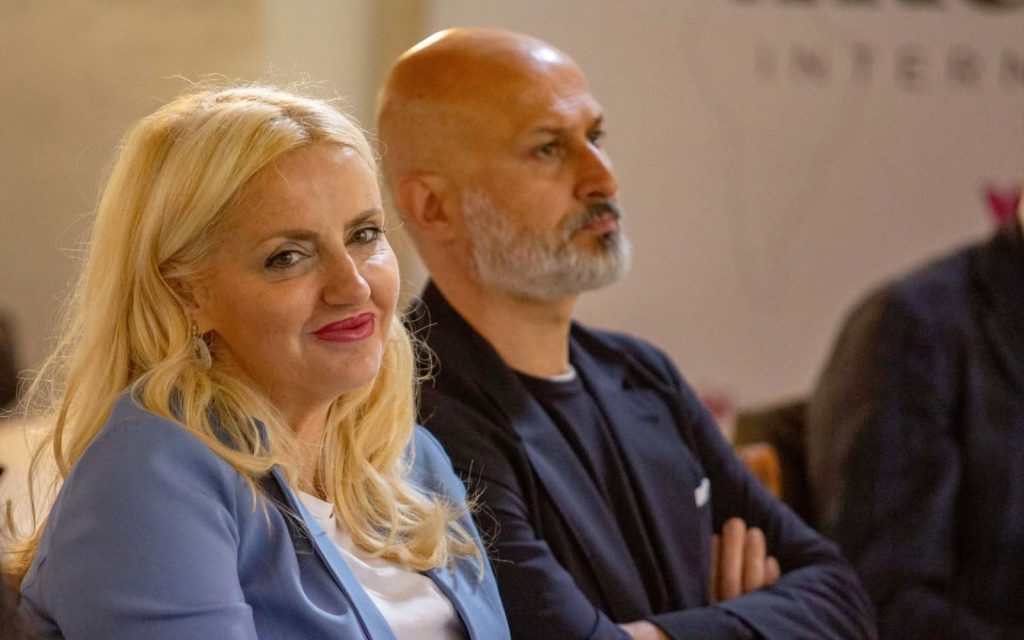
He doesn’t need to say it. You can sense it in the trust people place in him and in the ease with which he talks about his work. I’ve seen this for myself on several occasions, and I believe that some forms of respect are even more beautiful when they emerge this way, without being flaunted.
Meanwhile, he began to forge his own path. The first wine he produced entirely on his own was Pomèle, an Aleatico passito from Falesco in 1999. Next came Poggio dei Gelsi, Est! Est!! Est!!! from Montefiascone, with the 2001 vintage. These steps reflect a gradual growth, without the need to immediately create a signature wine or prove anything to anyone.
Then comes the 2016 Montiano. And here, at least for me, something important happens. Montiano isn’t simply one of the Cotarella family’s wines. It embodies a fundamental part of Riccardo’s professional history, and entrusting it to Pier Paolo meant handing him much more than just a vintage. Riccardo gives him the space, and Pier Paolo fills it without betraying what that wine had been, yet without hesitating to put his own stamp on it.
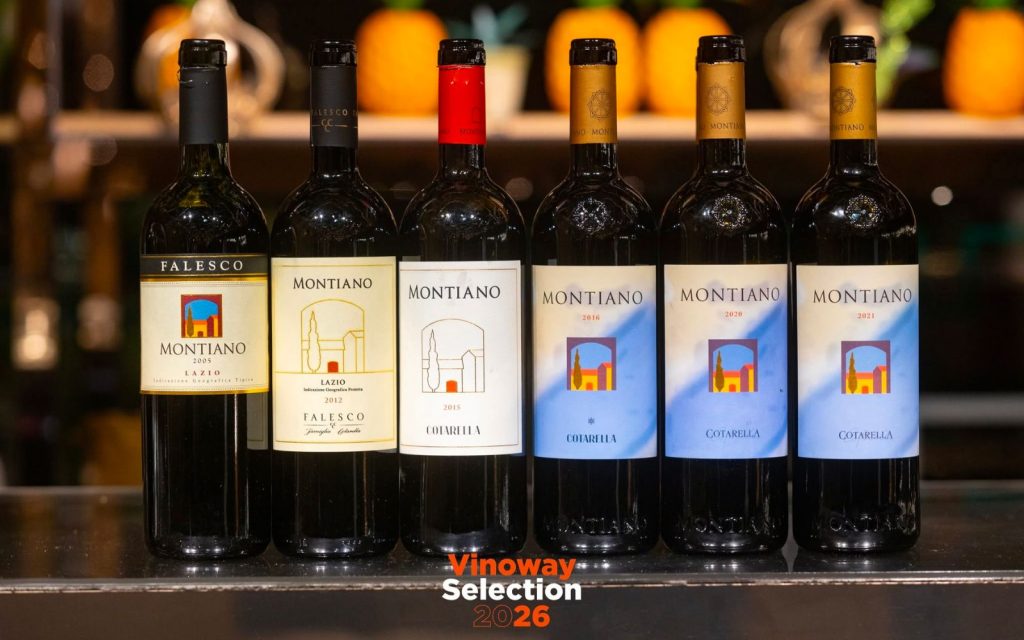
Personally, I consider the 2016 Montiano a true turning point in the history of this wine. I find depth, authority, and elegance, but I also sense a different direction—an identity that renews itself without renouncing what had been done before. It is perhaps at that moment that the student definitively ceases to be merely a student. Since then, the journey has been significant, and today I believe it is right to reflect on what Pier Paolo represents, because it would no longer make sense to describe it solely through the name of Riccardo Cotarella.
Today, Pier Paolo Chiasso is the General Manager and winemaker at Famiglia Cotarella and bears a significant share of the technical responsibility for the wines. Over the years, his style has become increasingly prestigious and recognizable without breaking with the tradition that came before him. Rather, it is an evolution—a pursuit of balance and elegance—and a personal way of interpreting the relationship between wine and terroir.
Dominga herself acknowledges quite naturally the role her husband has taken on, and I have personally sensed just how deeply she respects him. It is not merely a wife’s affection; there is also an awareness of the value of a man who is now entrusted with an important part of the winemaking legacy of a history that predates him—a legacy he is now helping to carry forward.
But Pier Paolo is not just about Famiglia Cotarella. There is also Chiasso Cotarella, the wine consulting firm where his name appears alongside Riccardo’s and which Pier Paolo now oversees. This, too, speaks volumes about the journey he has taken: that young man who initially observed and learned has become an enologist called upon to engage with wineries, regions, grape varieties, and production styles that are very different from one another.
Consulting is perhaps one of the fields where the ability to listen matters just as much as the ability to make decisions. You can’t walk into a winery thinking you’ll produce the same wine everywhere. You have to understand its history, get to know the region, listen to those who live it every day, and only then figure out where to step in. A consultant’s signature should never overshadow that of the producer, and I believe this approach is deeply ingrained in Pier Paolo’s way of working.
Even my interaction with Riccardo has inevitably changed today. We are no longer simply the teacher who instructs and the student who learns. We are two winemakers who work together, discuss, taste, and bring to the glass experiences gained at different times.
Riccardo didn’t train someone who was destined to remain in his shadow forever. He helped nurture a man who one day might walk alongside him. Over the years, I’ve had the privilege of interacting with Pier Paolo on several occasions during tastings and masterclasses, and it was precisely over a glass of wine that I got to know him better.
I don’t recall ever seeing him try to show off how much he knows. He listens a lot, speaks when he feels he has something to say, and doesn’t try to make a splash. He is composed, proper, never over the top, and possesses a refinement that stems not from the circumstances but from his character. Even when the discussion turns technical, he maintains the same level of composure.
Pier Paolo Chiasso is a wine connoisseur without needing to act like a wine celebrity. And after so many tastings together, I can say with conviction that I consider him one of the greatest noses and palates in the Italian wine scene today.
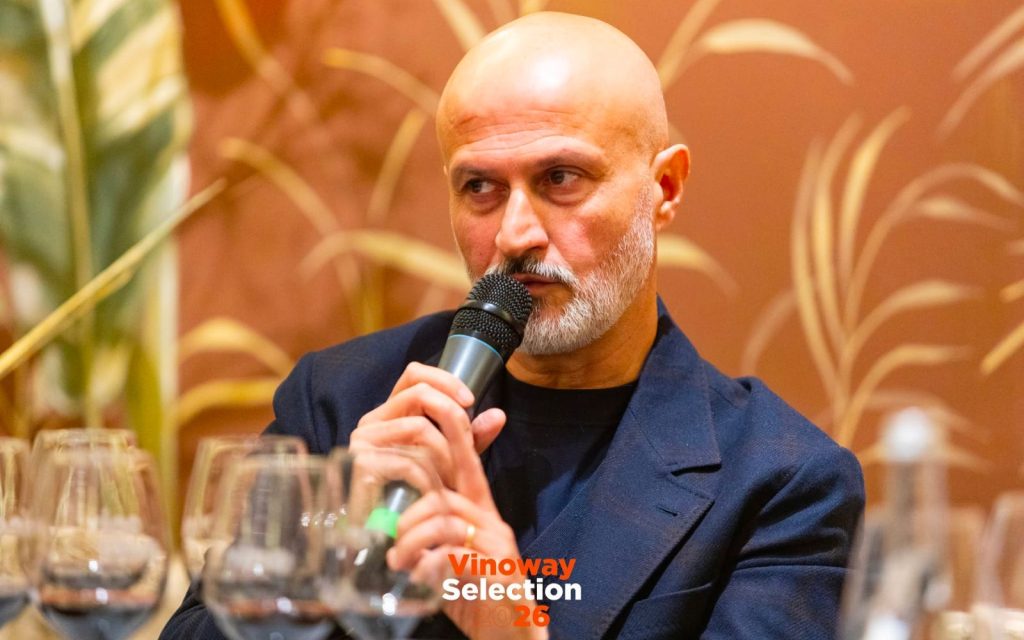
I’m not just referring to the ability to recognize a scent or spot a flaw. That’s knowledge, and knowledge is something you build. In Pier Paolo, there’s something that goes beyond that—the ability to read the balance of a wine, understand its nuances, and sometimes almost anticipate its evolution. Perhaps that’s why I really like the comparison he draws with another of his great passions: soccer.
While talking with Pier Paolo, he himself suggested a comparison that I find particularly effective for understanding his approach to wine. In soccer, you can learn the plays, train, and study every move, but when the ball reaches your feet, touch, creativity, and something unique to the player come into play. According to Pier Paolo, something very similar happens with wine. Technical preparation is essential, but there always comes a moment when you have to make a choice—and that’s precisely when the winemaker’s sensitivity and personality shine through.
That’s his own perspective, and I think it says a lot about the professional he has become. In 2022, Vinoway chose to honor Pier Paolo with the award for Best Italian Winemaker. It was a decision I strongly believed in because, even back then, I felt the time had come to view him not only through his relationship with Riccardo but for what he had managed to build through his own work.
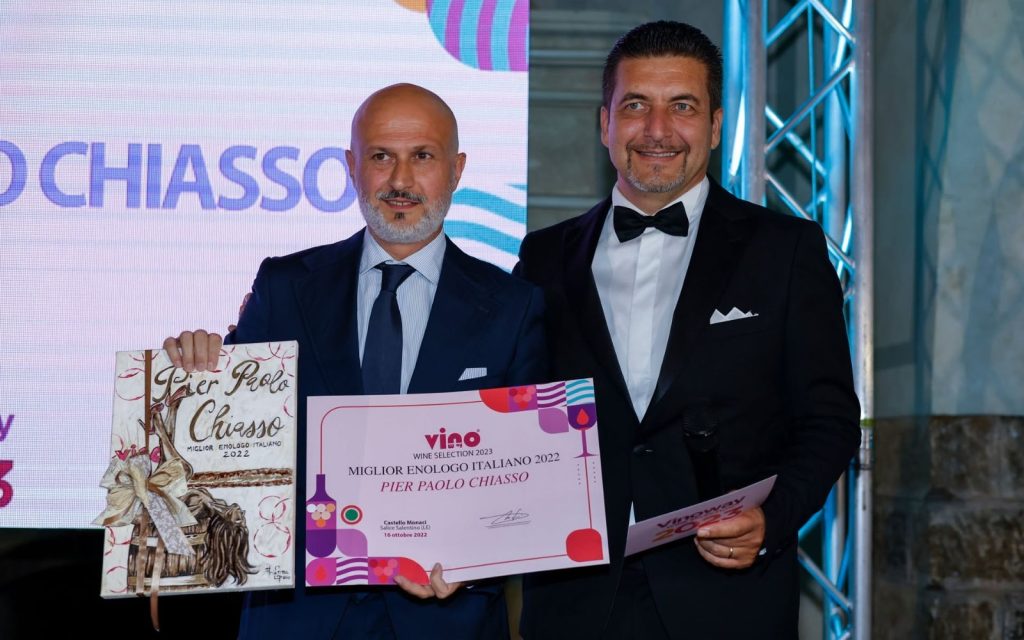
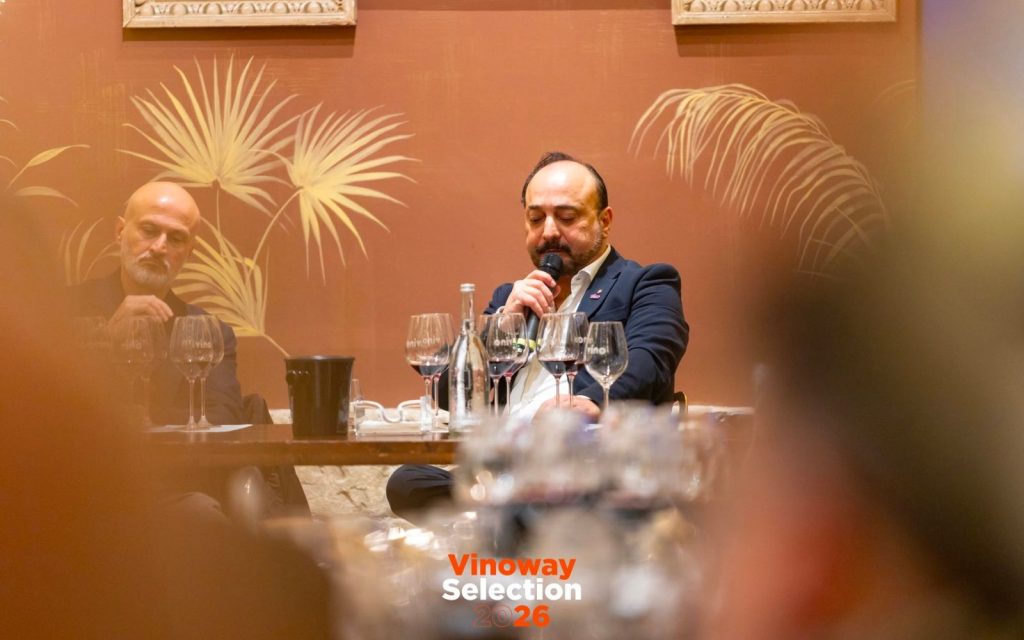
Last year at Castello Monaci, we had the privilege of having him by our side during a major masterclass dedicated to Montiano, and once again I found him to be the same Pier Paolo I’ve always known: knowledgeable, composed, and attentive to others. The relationship I’ve built over the years with Riccardo Cotarella has given me the opportunity to get to know—with the time and discretion that such bonds deserve—even the people closest to him.
Quando un cognome assume un peso così importante nel proprio settore è inevitabile che intorno ad esso si costruiscano percezioni, giudizi e qualche volta convinzioni che nascono prima ancora della conoscenza diretta. È qualcosa che appartiene quasi naturalmente a chi raggiunge una grande visibilità e occupa per molti anni un ruolo centrale nel proprio mondo.
Then, as you get to know people, certain perspectives change. That’s what happened to me as I got to know the Cotarella family over time. Behind what, from the outside, might appear to be one of the most prominent names in Italian wine, I found people who were very close to one another—with different personalities, a strong sense of family, and, above all, a simplicity in their relationships that is difficult to convey through a title, an award, or an official photograph.
I don’t think there’s much more to add, because some aspects are a matter of personal knowledge and should remain so. I can say, however, that spending time with them has, over time, given me a more human—and certainly more complex—perspective than the one that inevitably comes with such a well-known last name.
These are relationships that are important to me, and for that very reason, I prefer to talk about them with great care. Perhaps this closeness also allows me today to grasp a few more nuances of Pier Paolo without letting affection take the place of judgment. In his case, it’s his story that makes everything easier.
Pier Paolo doesn’t need to be celebrated. It’s enough just to tell his story. And then, sometimes, life seems to take pleasure in bringing stories full circle. Today, there’s another Riccardo who’s entering the world of wine. He is Riccardo Chiasso Cotarella, the son of Pier Paolo and Dominga, who is studying enology in Florence.
When I think of him, I naturally find myself going back many years and picturing the young Pier Paolo standing next to Riccardo Cotarella. Only this time, the roles are different. Pier Paolo will have a wonderful—and likely delicate—responsibility toward his son. “Riccardino” is growing up in a home where wine is part of everyday life and carries with it an important history. He’ll be surrounded by people from whom he can learn a great deal, but he’ll also need the chance to figure out who he wants to be.
And this is where life’s cycles and patterns become fascinating. Pier Paolo knows what it means to have a great mentor by his side and, above all, how important it was that that mentor didn’t make decisions for him. Riccardo Cotarella passed on his knowledge and experience to him but gave him the time to find his own path. Now Pier Paolo will find himself, with his son, on the other side of that same relationship.
Riccardo Chiasso Cotarella is just beginning to forge his own path, and perhaps the best thing is to give him all the time and freedom he needs to do so. He is studying oenology in Florence, laying the groundwork for his career, and has the opportunity ahead of him to discover his own way of interpreting this world, carrying with him a rich history without feeling its weight.
And there is something profoundly beautiful about imagining yesterday’s student, Pier Paolo, one day being called upon to guide his son in the same way that Riccardo Cotarella guided him. He is studying enology, laying the groundwork for his future, and will have time to choose what kind of relationship he wants to have with this world. But there is something deeply magical about imagining yesterday’s student one day being called upon to guide a new student.
Perhaps then Pier Paolo will understand even better what Riccardo did for him so many years ago. He didn’t just teach him about wine. He taught them to take their time. And perhaps that is precisely why a phrase that Pier Paolo likes to repeat takes on even greater significance.
“Wine has a wonderful ability to make people feel good.”
Related posts
Cristian Specogna: A story of wine that is also part…
Writing about Cristian Specogna is harder for me than writing about many other winemakers I’ve met over the years...

Defense of the Cotarella Family’s Image After the Report Program…
Recently, the Report program on Rai3 covered the Cotarella Family and its Foundation, raising some issues that have caused...

Feudo Montoni: the rural nobility of Fabio Sireci
I’ve always believed that wine is an act of love, a gesture of memory, a declaration of identity. And...