
Nero di Troia: the great Apulian grape still waiting for its truth
Written by Davide Gangi | Published in territory, wine 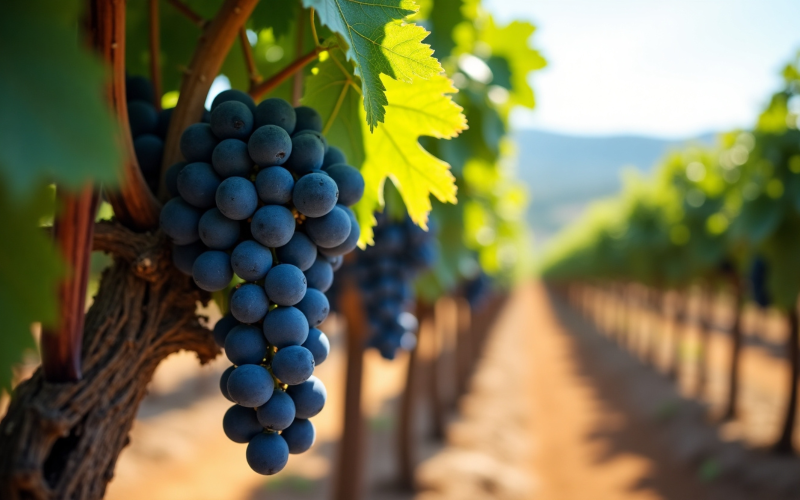
There is a grape variety in Puglia that holds great promise but still hasn’t received the recognition it deserves: Nero di Troia. A noble grape, rich in identity, and fascinating. And yet, after years of vinifications, unfinished projects, and unfulfilled promises, we still wonder what its true identity is and why no one has had the courage to define it.
Nero di Troia is technically complex. Thick skin, compact bunches, high polyphenol extraction. It requires precision: careful macerations, gentle pressings, calibrated aging. The tannins can be edgy, the acidity high—elements that ensure longevity but complicate the balance of the sip.
For years it was relegated to a blending grape. Only recently, with more modern vinifications, have we started to see convincing results: varietal wines, balanced, enjoyable. But it’s not enough. A clear direction is needed. A shared responsibility is needed.
The problem? Even today, a recognizable stylistic signature is lacking. Too much fragmentation—Castel del Monte and the Tavoliere delle Puglie seem to belong to two different worlds. A dichotomy that confuses critics, disorients the market, and weakens any possibility of recognition.
The real issue is this: communication that lives up to the grape’s potential is missing. No collective strategy, only isolated initiatives. The consortia remain silent, associations multiply without substance. Too many proclamations, zero vision. And in the meantime, Nero di Troia remains invisible where it should be asserting itself.
Market figures are fairly promising:
In Italy
– Estimated annual production: 1.2 million bottles (red and rosé)
– Distribution: 60% HoReCa, 30% large-scale retail, 10% direct/online sales
Abroad
– About 40% of rosé is exported
– Main markets: Germany (25%), USA (20%), Canada (15%), UK (10%), others (30%)
– Estimated annual growth: +5%, driven by rosé
Interesting numbers, but without a strong and shared identity, they remain empty statistics. Two territories, two philosophies.
Castel del Monte defends a classic, age-worthy approach, with three DOCGs that should be the flagship of Nero di Troia. And yet, communication is timid, positioning not incisive. Castel del Monte Nero di Troia Riserva (at least 90% native grapes) would deserve a national campaign. Instead, it remains confined to industry insiders.
The Tavoliere, by contrast, expresses more modern, direct wines, in tune with contemporary taste. Brilliant rosés, generous reds, born of a naturally suited land that still remains underappreciated. And yet here there is ferment, dynamism, and young people ready to bet on it.
Nero di Troia is a grape that does not forgive. It demands technique, patience, respect. But in return it offers authenticity, character, longevity. Both in the more austere version from northern Bari and in the fleshier one from the Tavoliere. The problem is not its potential, it’s the inability to act as a system.
Its aromatic signature is overwhelming. Intense aromas—wild blackberry, plum, violet, black pepper, sweet tobacco. On the palate: structure, progression, an elegant and persistent finish. Nero di Troia has everything it takes to become a symbol of southern Italian wine. And yet, no one seems to have the courage to say so with conviction, to bring together producers, consortia, and institutions around a unified vision.
What’s needed is a jolt, not a caress!
Rebirth can only come from a change in mentality. No more comfortable choices, no more “every man for himself.” Shared guidelines are needed, direction, powerful communication. Someone must finally take on the responsibility of making Nero di Troia a great Italian wine—recognized and respected around the world.
At Vinoway, we award the most deserving labels each year in our Selection, carrying forward serious and coherent communication. The Nero di Troia from the Tavoliere, in particular, is showing increasing value. But that’s not enough. The fate of a grape variety cannot be changed by one player alone.
Primitivo built a brand. Nero di Troia did not. Yet it has everything: identity, elegance, structure, recognizability. It’s only missing one thing—a strong, shared, forward-looking leadership.
The solution? Two souls, two narratives, one single message. But courage, investment, and a medium-to-long-term vision are needed.
Vinoway will continue to do its part. But now, a united front of producers, technicians, and communicators must choose to truly believe in this grape.
Nero di Troia must decide whether to remain an unfulfilled promise or finally become a great truth of Italian wine.
Related posts

Cirelli Wines: the brave choice of an engineer who gave…
I’ve known Francesco Cirelli since the very beginning of his company. I discovered him during a wine tasting evening...

Defense of the Cotarella Family’s Image After the Report Program…
Recently, the Report program on Rai3 covered the Cotarella Family and its Foundation, raising some issues that have caused...

Count d’Attimis-Maniago: Time Passes, but the Land Remains
Arriving in Buttrio means entering a part of Friuli where wine is not simply an agricultural product, but a...